NGOMA Manifesto

1. FUSION

“The boundaries of objects are vague – and that goes for us too… Describing the world in terms of discrete objects is a useful fiction.” – Kees van Deemter

Well worn cliche or not, everything is connected. Borders and separation, in the spheres of physics, of politics, of “race”, as it is of culture, are illusions fostered by narrow and fearful minds, often purposefully fabricated by those who seek control and to benefit from alienation, antagonism, and the suffering of millions.

Today our conceptions of the cultures of the world and of their relationships to each other, is sadly still under heavy influence of 18th and 19th century colonial revisionist versions of history.  In the United States, education reform initiated by the wealthy elite of powerful industrialists applied sweeping changes across university campuses, teaching a fundamental and intrinsic divide between “East” and “West”, painting the former as largely superstitious, backwards, repressive, and the later progressive, modern, liberal. While in Europe racist German and English scholars began erasing the African and Asian foundational influence of classical Greece out of history, replaced by an absurd Euro-centric story of the “Cradle of Western Civilization” developing more or less autonomously, with the only outside influence from “Northern Tribes”, separate from much older and more advanced civilizations in close physical proximity. The dissemination of this fictional dichotomy between the “occident” and “orient” has always been politically motivated: it furthers the aims of the ruling class, provides a necessary ideological backdrop for colonial and neo-colonial agendas, and is still instrumental in world affairs today (the structural basis for “the war on terror” as related to the demonization of Islam).

But there is no essential divide between “East” and “West”, their relationship being more like parent and child. And in the realm of music, the inter-relatedness of all cultures and the character of their specific relationships becomes apparent and clear. For instance the guitar was a direct descendent of the Oud, the grand parent of all plucked instruments, the first record of which appears in ancient Mesopotamia during the Acadian period (2359-2159 BC). The Romans around 40 AD made a version of it called the Cithara, which spread to the Vikings in Europe; and later Gypsies living in Islamic Spain created the modern guitar based on that. And if one traces the history of 20th Century North American pop and dance music, a crude and very abbreviated but basically sound genealogy describes a line going back to Disco, to Soul, to Funk, to Motown, to Gospel, to Blues, to Jazz, to work songs of the slaves, and indeed, to Africa.

Continuities are everywhere one chooses to look: the Balkans are connected to Israel to Iran to Spain to Egypt to Morrocco to Mali to the Congo to Haiti to Cuba to Colombia to New York City. Yet there is still this prevalent vantage point that “World Music” is indeed somehow fundamentally different from “Western Music”, and it is still shocking to some that non-Western sounds are making such a ripple in 2010 (the success of artists such as Omar Suleyman, and a new wave of indie musicians citing non-western influence). As if Rock and Roll itself wasn’t African American, and less directly, African in origin. As if Led Zeppelin wasn’t heavily influenced by Turkish music, or the Rolling Stones by Morroccan traditions, the Beatles by Indian Classical, Can and (early) Kraftwerk by East Asian sensibilities and African percussion, Debussey and John Cage by Indonesian Gamelan, Steve Reich and Georgy Ligetti by African polyrhythms, etc, etc, etc. Forward thinking and ground breaking modern music in the “west” has always taken cues from much older non-western sources (similar to the way modern visual art owes much to pre-modern, so called “primitive” forms).

2. RE-ENTRY

“Those piles of ruins which you see in that narrow valley watered by the Nile, are the remains of opulent cities, the pride of the ancient kingdom of Ethiopia. There a people, now forgotten, discovered while others were yet barbarians, the elements of the arts and sciences.” – Count Volney

Humans have surely forgotten much more than we know today, with the ravage of time, after countless wars, destruction of entire cultures, libraries burnt down. By the same token, ancient musical traditions contain forms which are more advanced, more inventive, more structurally challenging, more revolutionary in every sense of the word, than any “futuristic” electronic dance music today. And in terms of the expansion of minds or total ecstatic celebration, the bits and pieces passed down to us, remnants of musical traditions reaching back to ancient times, often embody methods far superior to what you might find in today’s dance clubs. One man sitting on the island of Madagascar, singing over an insistent Rhythmelody plucked out of a single-string instrument contains all the elements of minimal techno, and with more ingenuity, more grace, more efficiency, more innovation, more raw power, than anything produced in the last 30 years.

All rhythm certainly comes from Africa, as the drum itself was invented somewhere around Kenya tens of thousands of years ago. But African music is much more than drumming, for example the various Kora traditions weaving complex melodic structures that would make Bach dizzy. To be more precise, in much of African music one finds an un-differentiated oneness of rhythm and melody, never divorced from each other by over analytical minds. Examples of this can be found in Soukous guitar, various Mbira (thumb piano) musics scattered through out the continent, Yoruba talking drums, and multiple traditions of tuned percussion instruments such as the Balafon or Marimba.

What we have seen in the last few centuries of Western musical development is a return to rhythm, after being largely divided from it for many centuries under the European Classical establishment, which reduced its importance and saw it as “primitive” and “plebean”, emblematic of the music of savages and the underclass. But in the melting pot of the Americas, a traumatic confrontation between European and African traditions became probably the most important source of innovation in the past mellenium, forming the seeds of the myriad kinds of musical styles we know today.

The only way to move forward is to look back upon the treasures of our collective past. It is indeed this re-entry of indigenous musical heritage, fused with urban bass culture, this combination of ancestral musical ideas and modern sound, which is now giving rise to irresistible next level dance music on every continent. Crucial new scenes thrive and vital new styles are born in almost every corner of the world, challenging and displacing the centralized hegemonic culture manufacturing machine which attempts to fill the world with its vacuous regurgitation. But despite the spread of information technologies, there is a pointed lack of communication between musical communities of the world today, and many scenes remain relatively isolated and insular, inaccessible to their potential global audience who hunger after new sounds. For instance Kwaito, the South African House/Hiphop hybrid style based on traditional Zulu music, flourished for 2 decades within the townships while being virtually unknown outside, and only recently began to make waves in the world at large.

3. the Responsibility of DJs

“who cares? it’s just music!” – anonymous

Economic, political, and other arbitrary factors entirely other than artistic merit often determine which music rises to global prominence, and which is relegated to obscurity and silence outside of it’s region. As the pioneering early 20th century ethnomusicologist Alan Lomax put it half a century ago (i paraphrase): “mass media broadcasts the voice of the privileged, while often times more deserving, more beautiful voices in poverty stricken places remain unheard.” Thus djs in these neo-colonialst times, as cultural workers whose particular role gives them direct access to large audiences, must be aware of the many levels of inequity in the world, and do his/her job with this awareness in mind.

Of course, above all other concerns, djs must rock the party. We must create unforgettable experiences on the dance floor, and fascilitate that most important (no, it is not frivolous at all!) of social functions: the celebration of life despite its hardships. But there is more than 1 way to mash up the dance, and djs do not have to pander to the charts or appeal to lowest common denominators to please a crowd.

It is possible to simultaneously entertain and educate the audience. DJs can transcend the here and now, go beyond (or destroy completely) the status quo, if they choose to. Music is never “just music”, but always an expression of subjective social reality.  The world around us and the particular dynamics and situations we are in, from the macro to the micro, should to some degree inform each dj set, with site specific references and conceptual links, infusing the musical experience with many levels of meaning. A good Dj does in depth research into her/his chosen styles, studies its history and lineage as related to other strands, and find and make unexpected connections.

In this day and age, many members of society and especially other kinds of artists still view the DJ as a clown-ish, superficial, unsophisticated and unimportant character, who exists solely to entertain drunk idiots. If all other reasons fail, this might be motivation enough to start taking ourselves and what we do more seriously.

Chop Chop Akwaaba Supermix!

The super awesome and diverse Akwaaba asked me to do a mix to represent the first 2 years of their existence, and it was a challenge. The releases cover a wide range of both classic and modern sounds — how was i going to move from Malian roots to African Salsa to Kwaito, Hiplife, Afro-pop, Jazz, Funk, House and Kuduro? This is what i came up with. enjoy!

01 Baro – Ahmed Fofana
(from AKW001 VA – Akwaaba Wo Africa)
02 Alou Sangare Buranke – Kana Mine Mogo Kan Man
(from AKW006 Alou Sangare Buranke)
03 Mamou Sidibe – Noumou
(from AKW004 Mamou Sidibe – Djougouya)
04 Just a Band – Tingiza Kichwa
(from AKW015 Just a Band – 82)
05 Skeat – Basimanyana mamela Meroapa
(from AKW018 Skeat – Basimanyana Mamela Meroapa)
06 Iba Diabate – Sow
(from AKW013 Iba Diabate – Mouna)
07 Appietus – Ma Alomo (featuring KK Fosu & Reggie Zippy)
(from AKW020 Appietus – The Revolution)
08 Killamu – Vai Con Calma
(from AKW014 Killamu – A Minha Face)
09 Killamu – Não aceito, não
(from AKW014 Killamu – A Minha Face
10 Michel Pinheiro – Femme
(from AKW007 Michel Pinheiro – Agoh)
11 Bradez – One gallon
(from AKW001 Akwaaba Wo Africa
12 Quabena Philip – Wadaade Me
(from AKW002 VA – Move It Chaleh!)
13 Appietus the Revolution – Essabel (featuring Old Sodja & Mike)
(from AKW020 Appietus – The Revolution)
14 Ruff n Smooth – Swagger (feat. Stay Jay)
(from AKW023 Ruff’n’Smooth – Life Is Rough and Smooth)
15 Iba Diabate – Iba Nana
(from AKW013 Iba Diabate – Mouna)
16 Jali Bakary – Combination
(from AKW016 Jali Bakary Konteh Konteh Kunda)
17 Rabbi – Wedding
(from AKW002 VA – Move It Chaleh!)
18 Skeat – Dumelang
(from AKW018 Skeat – Basimanyana Mamela Meroapa)
19 DJ Djeff feat Maskarado – Elegom Bounsa
(from AKW024 DJ Djeff feat Maskarado – Elegom Bounsa)
20 Ruff n Smooth – Azingele feat. S.K. Blinks
(from AKW023 Ruff’n’Smooth – Life Is Rough and Smooth)
21 Killamu – Melodia De Semba
(from AKW014 Killamu – A Minha Face)
22 Killamu – Flaminguinho
(from AKW014 Killamu – A Minha Face)
23 Killamu – Yuya
(from AKW014 Killamu – A Minha Face)24 Killamu – Tchilu
25 Noite e Dia – Tiramakossa
(from AKW010 VA – Akwaaba Sem Transporte)
26 Just a Band – Kaa Ridho
(from AKW015 Just a Band – 82)
27 Jali Bakary – Kelefa
(from AKW016 Jali Bakary Konteh Konteh Kunda)

NGOMA MIX 10 – Umlilo

Umlilo means fire in Zulu, and this mix takes us back to the Dirty South for a scorching ride through raw township sound. Exchanging smooth for ruff, Umlilo focuses on the connection between ghetto Rap and current Electro, between modern SA House and its Kwaito roots.

OR: STREAM: MIXCLOUD // DOWNLOAD SINGLE TRACK:  MEDIAFIRE

Futurism in Africa never disconnected at all from the body: sound design does not become a solipsistic end in itself (even though every timber and texture is perfection itslef); song form stays 100% intact in the electronic club music format; and the beats never bang on aimless and without purpose — robust machine groove reinterprets but absolutely incarnates the magic and essence of timeless rhythmic tradition.

regarding the first song:  what kind of church drops sick bass like this?? (sign me up!)

01 Dj Killer – Church Song feat. Chaka Chukwu
02 Big Nuz – Superman
03 Xavatha (Woza Chynaman)DJ Clock ft. Big Nuz, Tzozo & Sox
04 Big Nuz – Ungesabi (remix)
05 Zola – Khokhovula
06 Big Nuz – Izinja feat Tira and Tzozo
07 TKZee – Fella Kae
08 CNDO – Seducer feat. Tira & Big Nuz
09 Mgo – Yes
10 DJ What What – Unknown
11 Unknown – Woza Durban
12 Dj Sbu – Vuvuzela Bafana
13 Dj Vetkuk Vs Mahoota – Cina Feat. Dj Killer
14 Dj Skzi VS Big Dawg – Mbeleke
15 Dj Cleo – Egyptian Drum
16 B.O.P – Bop Killer [Featuring Zulu & Costa]
17 Dj Cleo – Akulalwa
18 Penny Penny & Joe – Nkosi
19 Mafikizolo – Sibongile
20 B.O.P. – Life’ Iskorokoro
21 Dj Cleo – Ndizayitya Lemali

NGOMA MIX 8 – Saudade

Historically the Afro-Caribbean connection has produced so much amazing music about romantic love. Particularly, Angola and Cape Verde has developed specific strands of musical expression which focus on a special feeling: that of loss and longing, of desire and nostalgia, of love mixed with sadness. (an example most are familiar with would be the Cape Verdean Morna artist Cesaria Evora) I believe that the best love songs in the world are actually about the lack of love, and this mix focuses on music both sexy and deeply emotional.

DOWNLOAD SINGLE TRACK: MEDIAFIRE

Since Zouk arrived (back) in Africa from the Guadeloupe and Martinique islands, where rhythms and melodies of the African “expats” mixed with Rumba, Calypso, Gwo Ka, Compas, Reggae, and even Salsa (and where they must have looked across the ocean with infinite longing for home), it has since been influenced by another deeply emotional music: Portugese Fado. Long story short, during the last few decades Zouk, Kizomba, and related styles have become IMMENSELY popular and ubiquitous in many parts of Africa.

But, sadly, we all know what this kind of huge commercial success does to a genre: it becomes cheap and watered down, and quantity replaces quality. Thus 99% of the modern Zouk and Kizomba we encounter today is tacky and paltry rubbish of incredibly bad taste, garishly saccharine instead of deeply moving like the Zouk of bygone years. Yet in this sordid state of affairs there are artists who are producing music which retain more than a touch of the golden years, making songs that are soul stirring as they are irresistible on the modern dance floor. So if one digs deeper, there IS such a thing as good contemporary Zouk and Kizomba: this is what i hope to convince people of, especially long time lovers of African music who have given up on these genres.

01 DJ Rams – Intro
02 Rei Helder – Miu’da (feat. Master Jake)
03 Rei Helder – Ventoinha (feat. Nelson Freitas)
04 Aleluia – 69 Anos De Idade  Aleluia
05 Chico Viegas – Ta kieto
06 Quatros Plus – Slow Motion
07 Babete – Tarraxinha Da Noite
08 Dj Rams – Remake (feat. Sasha Grey)
09 Dj Znobia – Tarraschinha Proibida / Quero Te Sentir
10 Mulatu Astatke – Motherland
11 Malcom Pro – Love is Back
12 Unknown – Unknown
13 Georges Pionquitte – Pa Ni Koko
14 Chico Viegas – Saudades
15 Chico Viegas – Te juro amor
16 Marízia – Unknown
17 Mobass – Unknown
18 Unknown – Unknown
19 Master Jake – Carinho
20 Manya – Bola De Trapo
21 Chico Viegas – Samba makia
22 Chico Viegas – Mu d’zomba
23 Cabinda A Cunene – Bana
24 Falso Testemunho – Maria Alice
25 Sol Na Tchada – Maria Alice
26 Michel Pinheiro – SOS Enfants Soldats
27 Juana Molina – Tres Cosas


NGOMA MIX 7 – Hard Ass

Not sure what Kuduro means in the Kimbundu language of northern Angola, but its colorful translation in Portuguese is in some ways fitting of the music in both form and theme. Still, even though a lot of the music is hard, and a lot of the songs about fucking, the phrase is very much limited in describing the rich layers of word and sound, and becomes reductionist if taken only at face value. Kuduro can also be playful, humorous, soulful, emotional, ominous, scary, joyful, celebratory, and uplifting. It is also sonically adventurous in radical ways, fearless in its pushing and often destruction of dance music’s aesthetic boundaries, in ways often more bold and creative than sound-design obsessed electronic music from North America or Europe: from sweet accordions to reckless synths, from 8-bit game console palettes to near industrial noise, from samples distorted way beyond recognition to some of the deepest basslines in the world. And the vocals are just as wildly diverse: from “normal” singing to what sounds like children rapping to animalistic growling, grunting, yelling.

OR: STREAM: MIXCLOUD //// DOWNLOAD: MEDIAFIRE

The many different flavors of Kuduro come from both its roots as well as later influence: mainly evolving from Batida rhythms (itself a fusion of African, Brazilian, and Caribbean traditions) of the 1980s, Kuduro has since branched out to sometimes incorporate elements from many other styles including Cape Verdean Funaná, Coupé-Décalé from France and the Ivory Coast, Afro-Brazilian percussion, Western Hiphop and Techno. A concise example of this melting of tradition, current club culture, and sonic experimentation might be track 28: Batida – Tribalismo Com Sacerdote, in which what sounds like distorted Mbiras (thumb piano) coexist with Angolan rap, furious rave energy and absolutely mental synth lines which verge on noise.

And speaking of Western Hiphop and Techno, this mix adopts quite a few Detroit Ghetto-Tech and Chicago Juke samples, to draw parallels between inner-city Afro-diaspora underground and African urban sound. Because, at least from where i’m standing, the Parallels are many: relentless and insistent focus on rhythm; use of repetition past the point of monotony in becoming pure abstraction; fast tempo and intensity pushing the dancefloor near breaking-point; gritty, raw, and unpolished sound; and finally, ruthless libidinal energy which defies any attempts at restraint.

Also, besides a few entirely unexpected and thrilling use of cultural pastiche in the songs themselves, there are 2 of my mashups here: track 16 which incorporates Indonesian Jaipong drums and track 35 which transforms the orchestral version of an old rave number we all know. Mostly consisting of both older and newer Kuduro from Angola, this mix also includes a few songs from Tanzania, Cote d’Ivoire, Cape Verde, and Brazil. I tried to avoid Western interpretations of Kuduro altogether, but 3 tunes feature non-African collaborating producers or remixers: their inclusion is testament of the strength of these tracks.

01 Dj Znobia – Ta Pio
02 DJ Ramatoulaye – Alhaji (Aladin Mix)
03 Agré-G – É da Mong
04 Dj Assault – Bangin The Beat
05 Dj Nervoso – House Diney
06 Helder, Rei do Kuduro – Felicidade
07 Helder Junior – Unknown (samples Dj Godfather)
08 King Wendu – Unknown
09 Directamente da Banda – Baza Baza
10 Project Winter – Progressividade
11 Dj Nedwyt Fox – Agora Nukutusula
12 Dj Clintonn – C Du Chahut
13 Dj Znobia – Kuduro em Musica
14 Dj Joca Moreno – Jogo de Cintura (samples Coon Daddy)
15 Dama S & Puto Stro – Pedrada Forte
16 Apanha Tudo – Bomban
17 Dj Jesus – Humbe, Humbe
18 Dj João Reis – N.B.A. – Instrumental (samples Dj Spinn & Dj Rashad)
19 Master of Jaipong VS. DJ Amorim – Drum and Bass
20 Dj kito – Da Cara (samples Dj Rashad)
21 Zakee Kuduro & Buraka Som Sistema – New Africa (samples Dj Rashad)
22 Tinox – Sans Gueber
23 Dj Amorim – In The Rush Hour
24 Nervoso – House Diney (interlude samples Dj Assault and Ol’ Dirty Bastard)
25 Dj Djeff feat Maskarado – Elegom Bounsa X Dj V.R. – Batida Tchapu
26 Dj Jesus – Crazy Love
27 Dj Znobia – Eue
28 Lucky Gomes – Patiri
29 Puto Cossa – Vem Live feat. Dj Nedwyt Fox
30 Dama Pancha – Zum zum zum
31 Batida – Tribalismo Com Sacerdote
32 Dj miki – Dmc Caps Mix 2 (samples Kill Frenzy)
33 Katinga MC – Alegoria remix (samples A Lost People)
34 Dj Amorim – Os Angolanos
35 Figura – Ze Bula (Sabbo Remix)
36 Dj Ivan LLuv – Let’s Go
37 Unknown – Unknown (Follow Me)
38 Dj Kadu – Catelita
39 KLF and The Williams Fairey Brass Band – What Time Is Love
40 Ize’ feat. Anofela – Cape Decale
41 Schlachthofbronx – Farafina feat. Ete Kelly
42 Ize’ – Nhaku d’home
43 Unknown – Unknown (outro)

NGOMA MIX 6 – Ukulwa

(as featured on Gen Bass and The Fader)

Framing house music, perhaps the most depoliticized of all urban musics, whose narrative revolve around unreflective pleasure seeking, in a political context may seem incredulous to some. Yet this incredulity would be based on a superficial reading of the essence of house music culture, despite what it has become in the commercial sphere: in its very inception, the escapism into a fantasy hedonistic world was an expression of the underprivileged and marginalized, and the creation of a sanctuary of acceptance was nothing less than a political act of the oppressed and discriminated against.

STREAM: MIXCLOUD // DOWNLOAD SINGLE TRACK: MEDIAFIRE

Perhaps even more than Chicago or Detriot 67, the political dimension is deeply interwoven into the urban musical fabric of South Africa, and has profoundly influenced its evolution. Zulu protest songs live on through Kwaito, the first musical expression of a free South Africa, and from there the current House culture developed: if less overtly rebellious, it nonetheless retains in its beats and voices the spirit of revolt: the urgent and passionate expression of a people who have been subjugated for too long.

The Zulu word Ukulwa means war and struggle. and in this context it can only mean a war against oppression and the struggle for freedom and independence. Apartheid may have officially ended, but its myriad effects can be unmistakably felt in a slew of social problems which plague the nation today, from crime to domestic violence as result of the break up of families, from poverty to various hardships which come from an entire generation having been systematically deprived of formal education. Thus even while many positive things are taking place, as South Africa is surely rising as a proud modern nation, even as we rejoice in these blissful rhythms, we must remember this war, and both continue, and continue to be inspired by, this struggle against domination, against injustice: Ukulwa.

NGOMA MIX 5 – Nomad Boogie

here is one for the boogie: classic and soulful grooves designed for more intimate spaces.

STREAM:  MIXCLOUD // DOWNLOAD SINGLE TRACK:  MEDIAFIRE

i made this mix for smaller and “normal” local bars and clubs: really tried to make something both for the general public, meaning anyone from any walk of life, as well as the music heads. the ideal is a CD that almost any bar anywhere in the world can pop in their stereo at any given night and have people nod their heads, tap their feet, and maybe even get a little jiggy. how close the actual product ended up being to this ideal is yet to be tested, as well as my thesis that one does not have to succumb to lowest common denominators to appeal to everyone. (we will see, i have already started giving these out to local establishments in berlin)

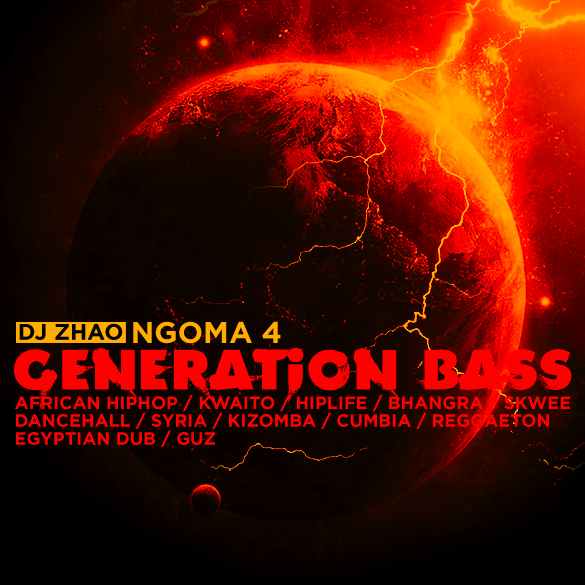
NGOMA MIX 4

Continuing from NGOMA 1, this is an excursion into 100 BPM global urban bass music.

OR: STREAM: MIXCLOUD // SINGLE FILE: MEDIAFIRE

Heavy on both classic and modern Kwaito: Arthur Mafokate’s 1993 track Oyi Oyi,  TKZEE with their Kwaito offshoot style known as Guz, and the immense talent that was Mawillies (RIP), whose effortlessly powerful voice graces the track GaGu.

Also tunes from other parts of Africa: the AshThomas project and Marvelous Benji from Nigeria, DJ Rams from in Angola, and Emmanuel Jal, the Sudanese singer with the crazy personal history.

Always great to find one great Bhangra tune on too many an album of otherwise generic numbers and a little taste of classic cumbia gold. A few all time Dancehall bangers and reggaeton, oh how i wish they still made them like El General did in Panama back in the early 90s. (all of these sounds need their own NGOMA volume, yes i do realize.  thanks 🙂

___________________________________________________________________________

01 [Ghana/UK] Professor Stretch & African Headcharge – Brother of Reality
02 [SA] Tone Deaf Junkies – Fred is Dead
03 [Nigeria] AshThomas – Music in My System (MIMS)
04 [SA] Mapaputsi – Kufa
05 [Ghana] Bradaz – Hiplife Review
06 [SA] Suspects – Wash’uMkhuKhu
07 [SA] Brikz – Swimming Pool
08 [SA] Mapaputsi – Kas Lam Dub
09 [SA] Mawillies – GaGu
10 [SA] Arthur Mafokate – Oyi, Oyi
11 [SA] Busi Mhlongo  –  Yehlisan’Umoya Ma-Africa (Soul II Black Remix)
12 [SA] Bongomaffin – Way You Live
13 [SA] Zola – Ndodandoda Dub
14 [SA] Unknown – Unknown
15 [SA] TKZEE – Guz
16 [Angola] DJ Rams – Fire Nigth Tarracho
17 [India] Sangeeta – Multani
18 [US/Angola] Fat Joe – Lean Back (DJ Rams & DJ X Remix)
19 [Norway] Easy and the Center of Universe – Hamada
20 [Egypt/US] Psychobabble Dub Interlude
21 [US] Badawi – Jihad
22 [Syria] Omar Souleyman – La Sidounak Syyada
23 [UK] Subway — 44110
24 [Angola] Helder Rei – Instrumental
25 [NL/US] SDP vs DJ Lengua – Mi Camino
26 [Colombia] Chambacu – No Quiero Envejecer
27 [Nigeria] Marvelous Benji – Swo
28 [Panama] El General – Digame Cual
29 [Sudan] Emmanuel Jal & Abdel Gadir Salim – Elengwen (afroArabia)
30 [Jamaica] Cecile – Hot Like We
31 [Jamaica] Vybs Cartel – Mi Fi A Dweet
32 [SA] Middle Finga, Cozi G, Oracle Flow & Ben Sharpa – Move Over
33 [Jamaica/UK] Sarantis & Warrior Queen – Retaliate
34 [SA] Zola – Lord of Sound
35 [SA] Kalahari Surfers – Gangsta

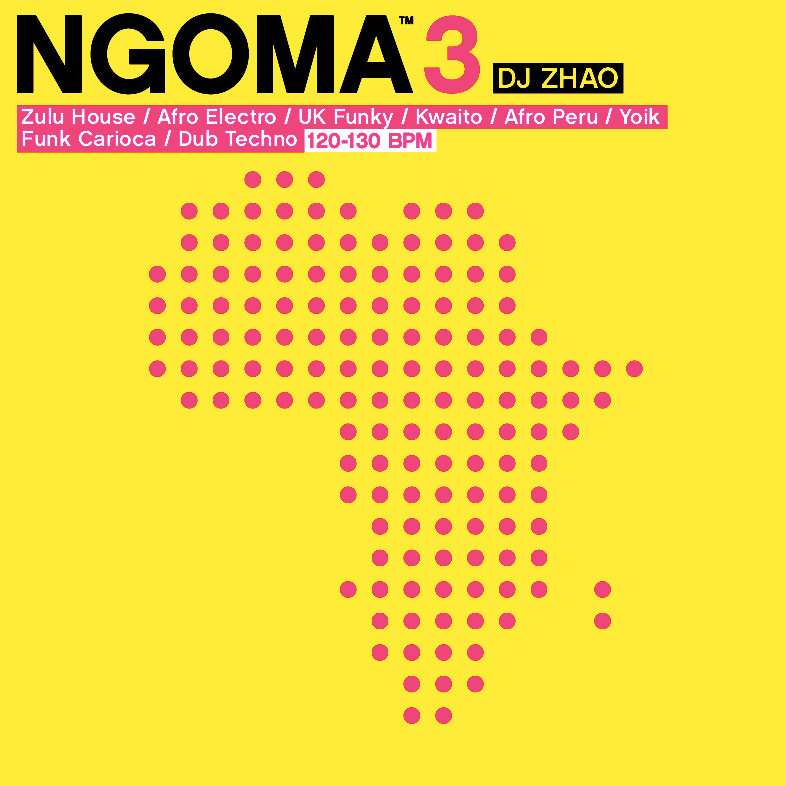
NGOMA MIX 3

Dj-Zhao---NGOMA3_frontwhile staying in the same territory as 2, the journey is not the same, and many things make this one unique: the psychedelic motorik genius of Dj Clock’s “Durban Guitar”; the monolithic, earth shaking visions of Black Coffee; DJ Sdoko’s ominous Kraftwerkian phuture; Manya’s soul stirring take on traditonal Angolan melodies; a surprisingly wicked banger from the Dutch DJ Bigga (UK is not the only place currently Afro minded), and ending with a further reach of rhythmic diaspora: Sami vocal style from Mari Boine, reinterpreting the sound of indigenous Norway.

OR: STREAM: MIXCLOUD //// DOWNLOAD SINGLE TRACK: MEDIAFIRE

concerning the anti-apartheid and war samples used through out the mix: the struggle for freedom from colonialism is the context which gave rise to contemporary South African music: Kwaito was born amidst antagonism and bloodshed, and has led to the current house music scene. thus songs such as “100 Zulu Warriors” and the radio broadcast at the end should not be taken as an incitement of racial conflict (especially in light of last year’s wave of horrible xenophobia) but as a reminder of the political realities of the Apartheid era from which this music comes.

01 [SA] Andy X – Tech House
02 [SA] DJ Clock – Durban Guitar
03 [SA] Bantu Soul – Isgubhu
04 [SA] Blackcoffee / DJ Christos and Demor – Searching
05 [SA] Black Coffee – 100 Zulu Warriors
06 [SA] Black Coffee – Stimela (remix)
07 [SA] Thebe – Ugezi
08 [SA] DJ Fhiso – House Animation
09 [SA] DJ Clock – Move Your Body
10 [SA] DJ Clock – No Fear
11 [SA] DJ Sdoko – Boozoom Base
12 [SA] Double Trouble – Mamelodi Funk
13 [SA] DJ Tira and Bubzin – Beat Goes On (Iyo)
14 [UK] Don Haffer – Mad Fling
15 [ANGOLA] DJ Znobia – Afrosound
16 [UK] Ossie – Tarantula (inc Funkineven Remix)
17 [Peru] Novalima – Mayoral
18 [UK] DSD – Fruity
19 [UK] Footsteps – Baby Kinta
20 [UK] Roska – Tack Tiles
21 [UK] DJ Mystery – Changes
22 [UK] DJ Tremendous – Log 19
23 [HOLLAND] DJ BIgga – Boeke Anthem X [BRAZIL] Menor do Chapa – Familia Vida Loka
24 [UK] Unknown – Unknown
25 [SA] Unknown – Thumping
26 [SA] Mr Flip – The Wild Thing
27 [UK] Geeneus – Yellowtail
28 [UK] Headhunter – Birks Range
29 [SA] Shana – Uyangichomela
30 [SA] Bucie – Amadoda (Black Coffee remix)
31 [NORWAY/GER] Mari Boine – Vuoi Vuoi Mu (Henrik Schwarz Remix)
32 [SA] Dr Duda and Dr M-bee – The Gap Featuring Gina
33 [SA/US] Terre Thaemlitz / Radio Freedom (Anti-Apartheid Broadcast)

NGOMA MIX 2

The drum comes from Africa, and also techno. Here is an extremely simplified version of the lineage: slave songs – blues – gospel – jazz – funk – disco – house – techno —- the circle is complete. After all, the 4 on the floor hypnotic groove can be found in the myriad styles of African music from every era. House and techno grew up in the northern hemisphere, acquiring a character a bit removed from the rich rhythmic traditions of the mother continent. But in recent decades electronic dance music has been developing in Africa, and a new wave of club music is blossoming and flourishing.

OR: STREAM:  MIXCLOUD // SEPARATE TRACKS DL: MEDIAFIRE

History was made in 2008 with Warp Records’ release of DJ Mujava’s Township Funk in Europe, and the world is slowly coming to grips with the awesome power of African electronic music. Motherland house and techno is spreading far and wide, forming the rhythmic basis for urban bass music in the UK and elsewhere: Africanized Killer Beats on the swarm!

NGOMA mix 1

The positive side of globalization: irresistable 21st century urban music arise on every continent. India, Cuba, Tanzania, Egypt, Cape Town, these are just a few places where wild hybrid styles are born: futuristic, bass heavy and electronic, yet drawing from the wealth of local musical heritage. the NGOMA series bring the heat from musical hotspots across the known world — the wickedest beats and sweetest flows.

OR: STREAM:  MIXCLOUD // DL: MEDIAFIRE

___________________________________________________________________________

NGOMA SOUND official here we go!

from now on all things related to NGOMA Collective, Soundsystem, and DJ Zhao will be here.

a few highlights from the past 3 years:

FUSION Festival 2008 (Germany)

FUSION Festival 2009

INCUBATE Festival 2009 (Holland)

KWAITO IN BERLIN (with Gazza and EES from Namibia)

AT.TENSION Festival 2009

UDON CLUB with COOLY G

AYOBANESS! party with PASTOR MBHOBHO and MGO from South Africa!

ETHNOPORT Festival (Poland)

EXIT Festival (Serbia) / Summer Film School Festival (Czech) 2010

SHANGAAN ELECTRO @ BERGHAIN

and i’m just going to put this photo here: