TRI-CONTINENTAL 25.OCTOBER

LOCATION WILL BE ANNOUNCED ON DAY OF THE PARTY IN THE FOLLOWING SOCIAL MEDIA GROUPS:

WHATSAPP
TELEGRAM

If you have no social media at all, please send email to ngomasounds@gmail.com with subject: TRI-CON INFO

–––––––––––––––––––––––––––––––––––––––––

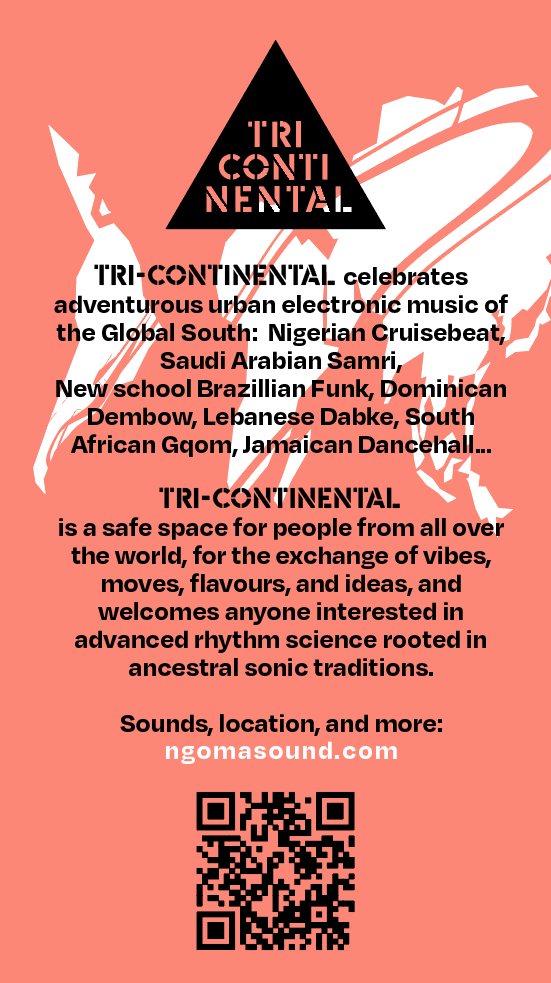
TRI-CONTINENTAL is devoted to the most advanced rhythm science from Africa, Asia, and South America.

During all of human history, various cultures have always traded goods, recipes, rhythms, ideas, and different peoples have always intermingled and intermarried. For millennia Africans, Arabs, Persians, Indians, Chinese, and Europeans did business and partied in metropolitan centers like Zanzibar, one of many such hotspots across the most vibrant exchange routes in the Indian Ocean. Until the 1600s, when the Portugese and later French and English, etc., choked off free trade by controlling all the major pots, and spread an ideology of cultural purity and ethnic essentialism, separating people into boxes — a process which has only intensified in our neo-liberal times.

Today in Berlin TRI-CONTINENTAL seeks to bring together people from migrant backgrounds and anyone interested in truly 21st Century dance music (rather than the same 50 years old Disco rhythm pattern), to enjoy real underground sounds from far away places, share ecstatic moments on the dance floor, build direct connections outside of the patronage and confines of state funded official institutions of liberal multi-culturalism.
The music we love is often made by poor people. While we do not agree with the occasional lyrical expression of violence, sexism, homophobia, etc., it does not stop us from playing the rich and meaningfully multi-layered music of the working class and under class, who are the inheritors of social dance cultures, the original collective sacred.

TRI-CONTINENTAL will take place at a sweet underground club in a popular nightlife neighbourhood, with around 250 capacity on the main floor, and 30 in the chill out area.

Because it’s an underground location, everyone must be very, very quiet while approaching and entering — we can not have any noise outside the door.

LOCATION WILL BE ANNOUNCED ON DAY OF THE PARTY IN THE FOLLOWING SOCIAL MEDIA GROUPS:

WHATSAPP
TELEGRAM


If you have no social media at all, please send email to ngomasounds@gmail.com with subject: TRI-CON INFO

See you on the dance floor 🙂
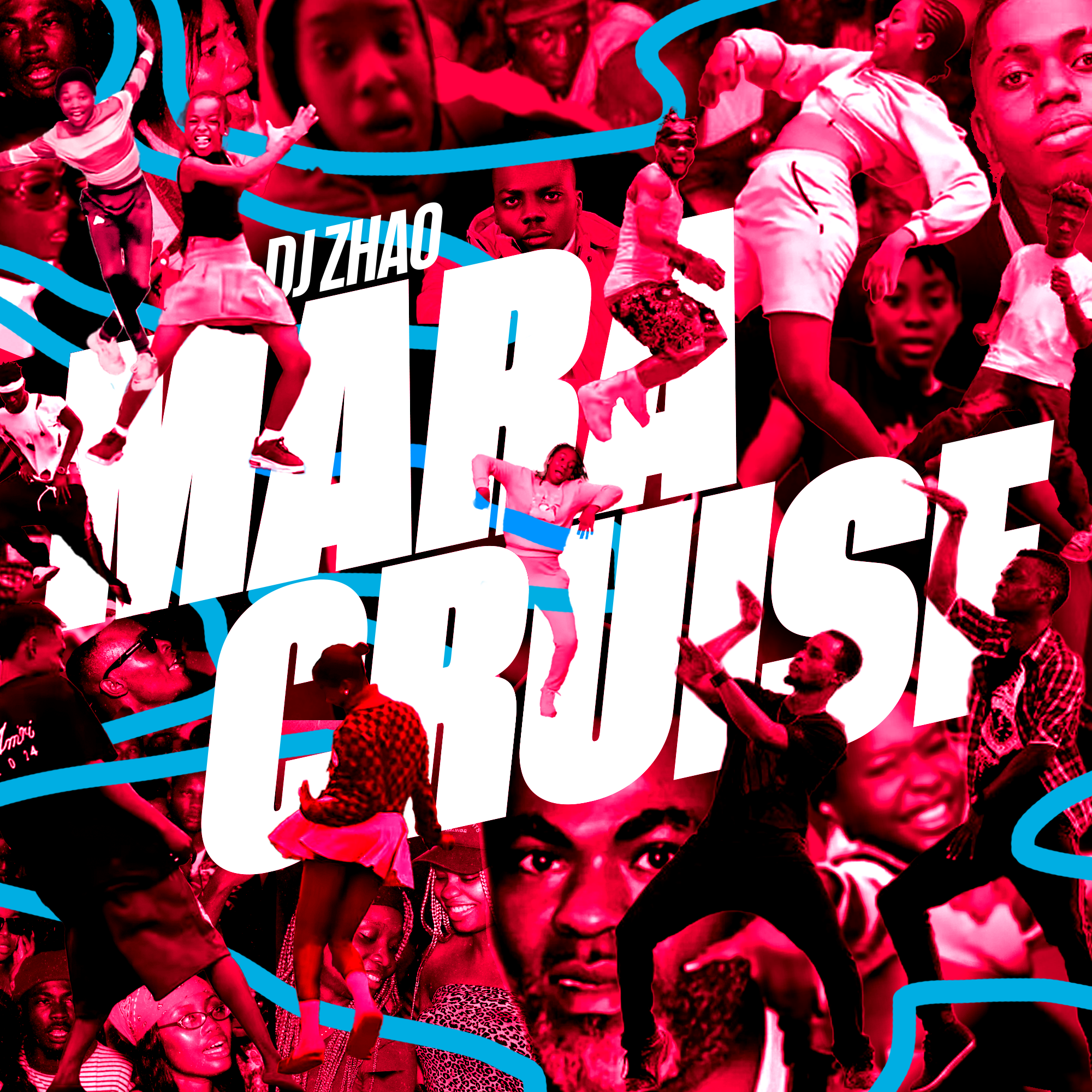
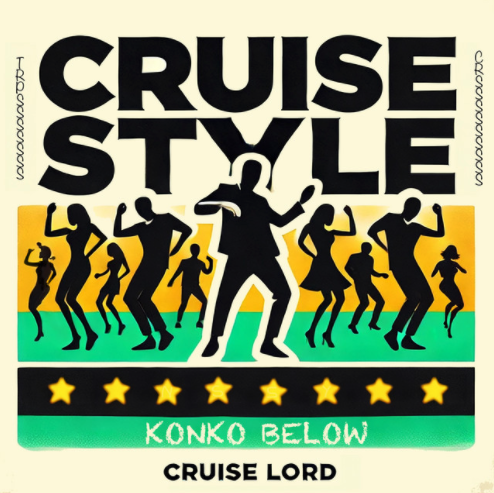
Mara Cruise

In Lagos slang, “mara” means “crazy, wild”, and “cruise” means “fun, a good time”.

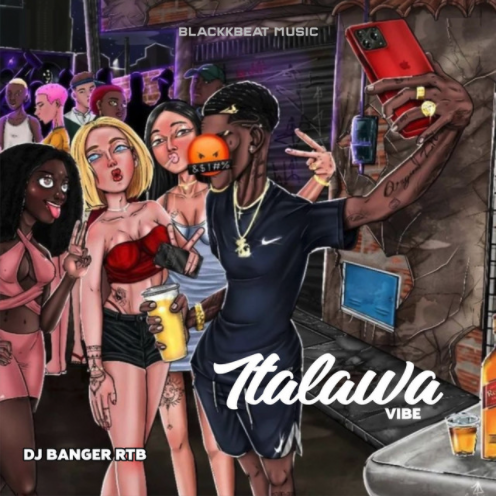
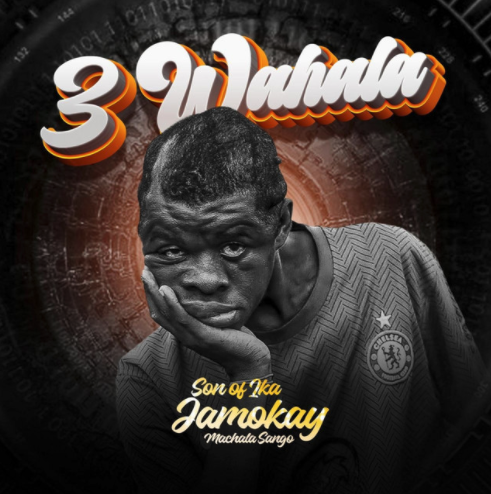
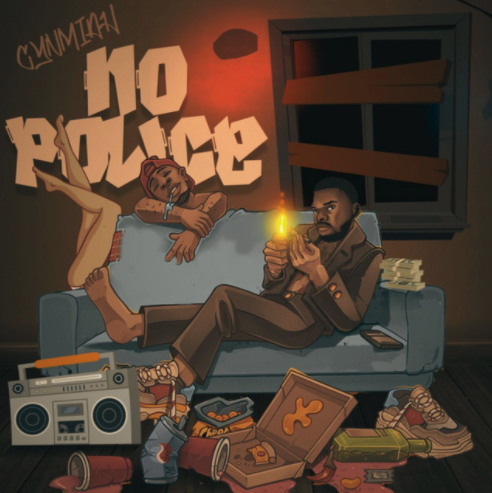
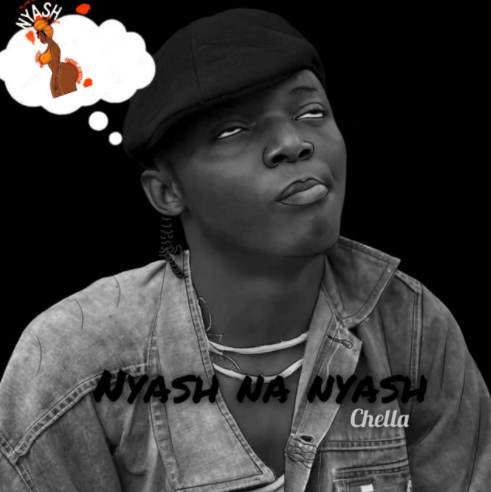
The loosely defined but at the same time distinct fresh style of music known as “Cruise Beat” or “Free Beat” began to spread from Lagos on TikTok and other social media around 3 or 4 years ago.

Cruisebeat is a kind of reaction against the by now ubiquitous and internationally popularised sound of Naija Pop with its slow tempos and languid, introspective, romantic themes reminiscent of Zouk/Kizomba. Instead, the younger generation is making music at much higher tempos, with cocophonous use of samples, and an irreverent, riotous modus operandi.

It is an unstoppable African hyper-modern DIY rave-virus full of raw, relentless energy, spreading through the streets of West African cities like a pandemic of boisterous sonic thrills and frenzied footwork. Rave With African Characteristics is full of rhythmic innovation, sonic adventure, crazy intensity, and ecstatic euphoria.

Clocking in on average at 1 or 2 minutes in length, the songs are not really “songs” as much as modular rhythmic pieces to be combined in infinite potential configurations. The elegance and integrity of this music is in its rigorous adherence to pure functionality: above all other concerns, the central objective is dance; and neither producers nor party goers ever lose sight of it.

But there is also something else, a central element of human creativity since the very advent of poetry and song, which has been almost entirely missing from European and USAmerican classical OR social music in the modern period and even for much longer: humour.

Cruisebeat features plenty of cheeky, looney, hilarious samples from Nollywood and elsewhere, childish, even toilet humour, and re-versions or remixes of funny, low-brow, and incredibly cheesy music such as “Crazy Frog” or “Happiest Year” by Jaymes Young (Don’t worry, I spared you from this one).

Musically ranging from Yoruba percussive dexterity, classic African Rumba, and Amapiano influences to palettes from Acid Techno and Trap, sometimes within the same track, everything is done with unmistakeable and entirey unmatched African rhythmic dexterity and effortless compositional brilliance.

Ironic that music made so quickly and spontaneously should actually, often, at the same time feel totally timeless.

Bass of Islam Series 1 – 3

Moon

This series of 3 epic mixes will not likely bring me any gigs, but you know I had to do it to ’em.

Predominantly Muslim music from Palestinians, Algerians, Moroccans, Syrians, Pakistani, Egyptians, Indians, Hausa, and Mongolians seamlessly mixed and juxtaposed as not only a tapestry of cultural cross pollination but a vision of future regional and cultural integration and unity.

Cat

Hypnotic and ecstatic Rhythmelodies in anticipation of increased West Asian, South Asian, South East Asian, East Asian, and African cooperation in matters of culture as well as economy, diplomacy, security. A sonic vision of a potential Asian Union as part of BRICS and rising multipolarity.

Tree

Freedom for Palestine.

Victory to the Axis of Resistance.

Igqomu – Class War

Gqom is South African rhythm tradition shaped by and reflecting the social reality of neoliberalism under a corrupted ANC, after Mandela having had to make major concessions to foreign pressure, unable to carry out the land and property reforms that were central to his post-independence program — high crime rates, high levels of social tension and conflict, high levels of discontent and anxiety.

As manic, brooding, and heavy as the best doom metal, but you know, FUNKY. Some real scrunch-face type stuff with relentless energy; most definitely not for the faint of heart.

The structure of the music is just as crazy, in terms of innovation: almost no straight 4/4 patterns, instead, all triplets like house-tempo Juke/Footwork; sometimes there are major drum sounds that happen only once in a track (!!!); the drum rolls are often placed at the BEGINNING of bars rather than the end (!!!!!!); the 1 actually comes at 1.5 (!!!!!!!!).

I am super jealous of you: wish I was hearing this mix for the first time 🤘🤘🤘🤘🤘🤘🤘🤘🤘🤘🤘

African Futurism ONE

Futurism in Europe, the sonic avant garde, for the past half century or more, has proceeded on a total rejection of tradition. A cultural product of post-modernism and historical nihilism, the assumption rested upon is that the past is only shit and must be destroyed, wiped clean, to have tabula rasa – which is nothing but a fantasy, never mind the result of false understanding. So what we end up with at Atonal or Transmediale is an aversion to melody, a rejection of musicality, thousands of artists making bleeps, bloops, rigid, mechanical, inhuman forms, all of which mono-cultural, mono-rhythmic, and deeply pessimistic. But in the end, contemporary European electronic music, for all its rhetoric and pretence at “futurity”, fails to innovate, and is today in 2024 still near entirely reliant on innovations made 40+ years ago in Detroit and Dusseldorf — clubs are mostly still playing the exact same single untz untz rhythm pattern.

Futurism in the Global South is the opposite.

Firstly there is a formal revolution every few years in which new palettes, new rhythm patterns, and new dynamics emerge. In South Africa alone, we have seen radical new styles like Gqom and Amapiano within just the past decades.

Secondly, contemporary African electronic music is characterised by an EMBRACE of tradition, and not only those of the music makers themselves. In a heavy bass number, all of a suddent bursts of ecstatic deep jazz saxophone. Forms like Samba, Jamaican dancehall, etc., etc., are often alluded to and paid respect or re-interpreted. Angolan Kuduro often references Brazillian music as well as include Portugese influences; Amapiano encompasses near everything that has happened in not only African but also African American music during the past century, from jazz to house to hip hop and reggae, but done in unmistakeably South African ways.

The horrors unfolding around the world today in 2023 can be seen as the birth pangs of a new, more just and peaceful world to come.

Along with the final and real removal of colonial forces and increased cooperation with the multipolar world, we will see, are already seeing, authentic economic development, connection, and integration in and of the motherland. In the next decades to century or more, the humanist technologies of the Global South will thrive, multiply, and cross pollinate.

Now is a time to mourn, to struggle, as well as to celebrate the deep, world historic changes taking place, and what is to come.

We should dance not despite, not in trying to forget, the violence and sadness of current conflicts, but in the realisation that this is the end of the imperialist era; and in solidarity with the rise of multi-polarity, envisioning a bright future for the formerly colonised.

Dance Dance Revolution: The Insurrectionary Politics of Shaking It

ddr.jpgAnarcho-Communist mega-party-mix: end of article

“If I Can’t Dance, I Don’t Want to Be Part of Your Revolution”

–Attributed to Emma Goldman

“Music is a weapon, a real weapon, in a concrete sense.”

–Desmond Tutu (1)

“Dancing is the remedy of resistance, the art of the marginalized and dispossessed.”

–Marc de la Maison (2)

Continue reading

The Journey Part 2


Rhythms of the mother continent meets Sound of Berlin: NGOMA envisions dance music of a society that we want our grand children to live in.  Decolonized poly-scyncretic drum machines of a high-tech egalitarian future, constructed from the plurality of various life experiences and multiple sonic perspectives today, NGOMA fuses the best of many worlds for maximum mind expansion, soul elevation, and body intoxication.

The Journey Part 1

in anticipation of the party on Saturday, i stepped in for Moon Wheel on his show The Journey on Berlin Community Radio:


Rhythms of the mother continent meets Sound of Berlin: NGOMA envisions dance music of a society that we want our grand children to live in.  Decolonized poly-scyncretic drum machines of a high-tech egalitarian future, constructed from the plurality of various life experiences and multiple sonic perspectives today, NGOMA fuses the best of many worlds for maximum mind expansion, soul elevation, and body intoxication.


NYEGE NYEGE Festival Official Mix

____COVER_final_800

Nyege Nyege Festival in Jinja, Uganda, is about the infinite and timeless rhythmelodic traditions from the motherland and its myriad mutations around the globe, and their sometimes difficult to perceive but indivisible connection. It is my duty as rhythm ambassador to reveal the truth about these connections between ancient and future, between the so-called “East” and so-called “West”, in a visceral way on the dance floor; and it is what i have tried to do with this mix.

Continue reading

Acid Machine Temple

AMT0

I’ve always loved Acid. Not only due to the squelchy palette of the misused TB303 being, for reasons i can not articulate (related to liking the smell of petroleum??), so endlessly delicious, sexy, and addictive, but also because Acid House and Acid Techno, ever since the beginning, have always been more overtly and unabashedly polyrhythmic than their bigger stylistic cousins.

Continue reading

Aztek Digital

Aztek-Digital2

Pre-Hispanic indigenous rhythm roots, influence from African sciences of the drum, Shamanic sounds from atop the Peruvian mountains and deep in the Amazonian jungle… These describe parts of this new electronic music known loosely as Tribal Guarachero. This mix comprises of mostly music from Mexico, where the original sound was born, with some tracks from Central, South, and North America, and Europe.

Continue reading

MUTANT 7 – Club Invasion

_CLUB-INVASION

In the ongoing rebirth of explicit poly-rhythms and super syncopated percussive goodness in African-American music, B-more/Philly and Newark/Jersey Club is a particularly sexy and fun permutation, and has been gaining momentum for a number of years, bursting with musical and dance ideas.  Vice just made a documentary and in 2015 i think it will finally invade dance floors all over in a big way.  (Next month i will be playing the first Vice sponsored Club Jersey party in London – stay tuned)

Continue reading

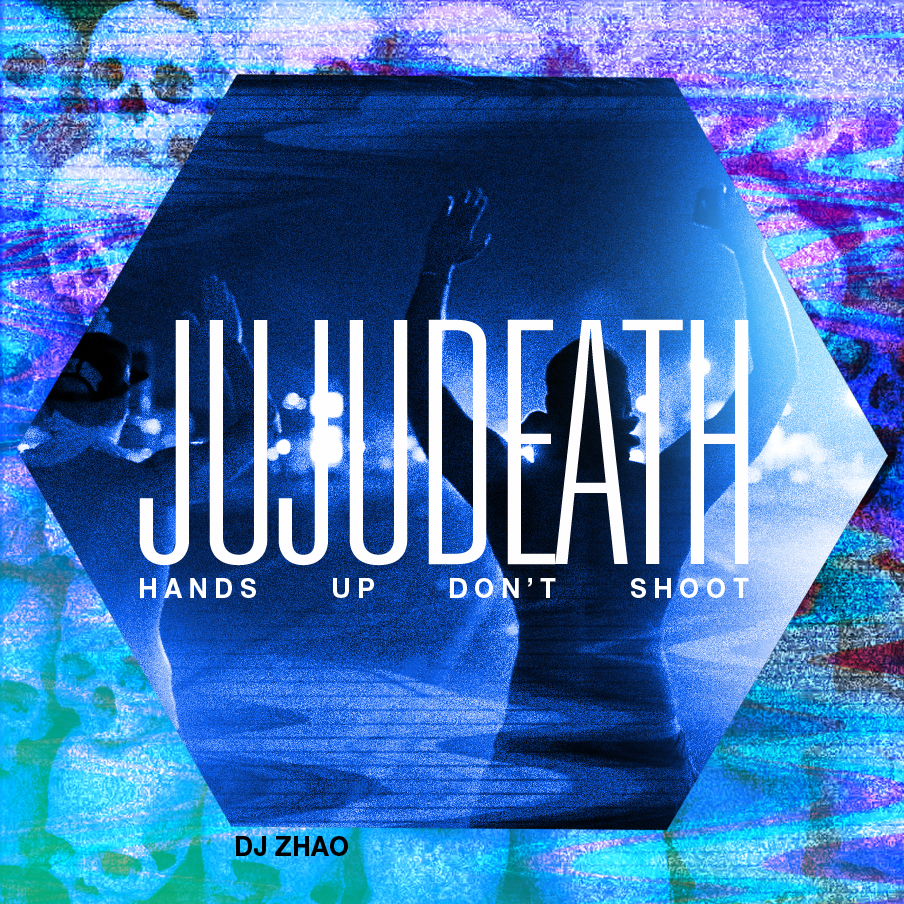
JUJUDEATH

JUJU-DEATH2

179 killed by institutional racist violence for the crime of trying to live in the drugs and guns infested poverty that white supremacy keeps them in, during the past 15 years, In NYC alone. How many disabled? In comas? How many with missing lungs or bullets in stomachs? How many broken ribs/arms/legs? How many physically assaulted? Abused in custody? How many terrorized? Humiliated? Incarcerated?

Continue reading